Making app creation easier for new Airtable users
________

Airtable's organic growth with enterprise customers had plateaued
Airtable's goal was to enable 1K+ companies to build connected data apps (interfaces) in Airtable on top of shared data. As more teams within an enterprise adopt Airtable to build their custom, business-critical workflows, it's easier for us to expand and have wall-to-wall growth $$$. We knew that Airtable is immensely powerful; however, some (much!) of the app configuration was too advanced for a casual or reluctant user to figure out, it required technical knowledge of app building, and thus, we saw our growth plateau.
Why now
According to our NPS report, Ease of Use was the most important factor driving user advocacy. As Airtable has grown, the complexity of the product increased (number of features, volume of data), the design dept increased, and user advocacy declined—this was particularly prevalent among the strategic accounts (customers with a smaller number of seats $ and could potentially transition to large accounts $$$).
“ This [current onboarding wizard] just didn't give me the information I was looking for and I got confused. The options were very limited on what I was tracking: projects, teams, or tasks. I also found [it] limiting that I could only select 4 fields and had to add any other additional fields one by one. I feel like it doesn't give you enough options that you're looking for or on the reverse it gives you way too many.”
“We want our employees to be creative and expand what is possible from a workflow standpoint [custom apps in Airtable] but also be a part of the larger collective [shared data], make it easier for everyone to just get the data that they require for their work without having to go through all the hoops. The [Airtable] selling point is really around how annoying the friction is, to have transactions all the time, like people just emailing, "Hey what's the latest launch date for X what's the latest principle start date for Y".”
🚀 Shipped 1st Nov 2023
Designer - Me!
Content - Allegra
Research - Caitlin
PMs - Serena
Engineers - Brad, Kenny, Ling, Bridger
So, what can we do
Creating an interface using shared company data can be overwhelming at first (or always!). People fear breaking valuable datasets and struggle to translate their app ideas into useful interfaces. We learned through research that users' confidence in their abilities and trust in Airtable increases with the successful addition of just a few fields of data. That made complete sense; it's similar to how a person gains confidence while doing something new and complicated, one simple step at a time. If we lower the floor for building in Airtable such that people have a positive experience, they'd be more inclined to try creating apps (aha!). How might we make it incredibly easy to adopt core Airtable functionality, which over time leads to more volume of successful Airtable apps (self-serve, product-led growth)? An intuitive app creation experience felt crucial to help existing Airtable users understand the power of building connected apps (over interfaces), and help new users understand what Airtable can do for them or their team.
What's important to get right
- The new app-building experience had to be fast, easy, and result in a 'valuable' app (drastically different from the previous build, each interface brick-by-brick version!).
- We had to create an experience that is approachable (no scary terms!), reassuring (meets users' needs!), relevant to specific use cases (mirrors how people think about their work), and confidence-building (this is what I expected, and I could do it again!).
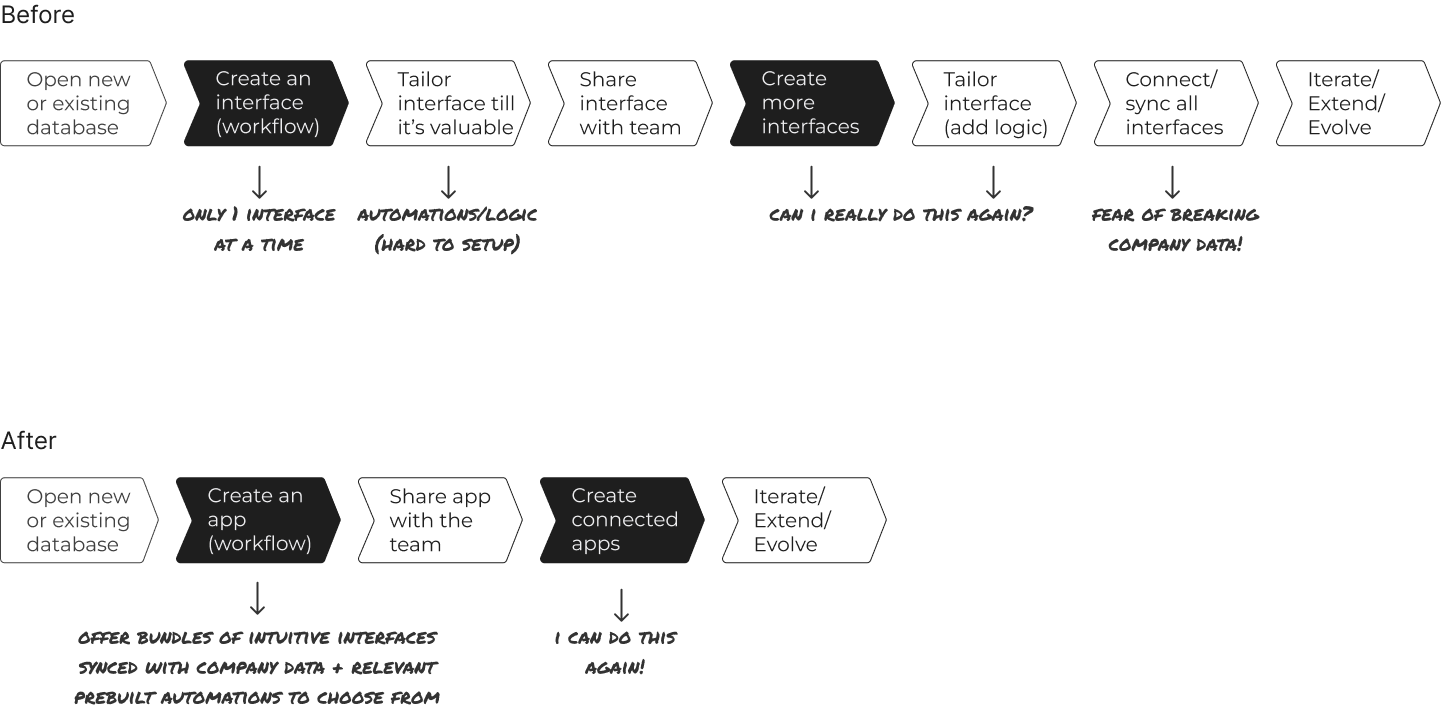
The how
How might we design a dramatically more intuitive, self-serve app creation experience that guides users through key decisions to quickly get them to a useful and shareable app?

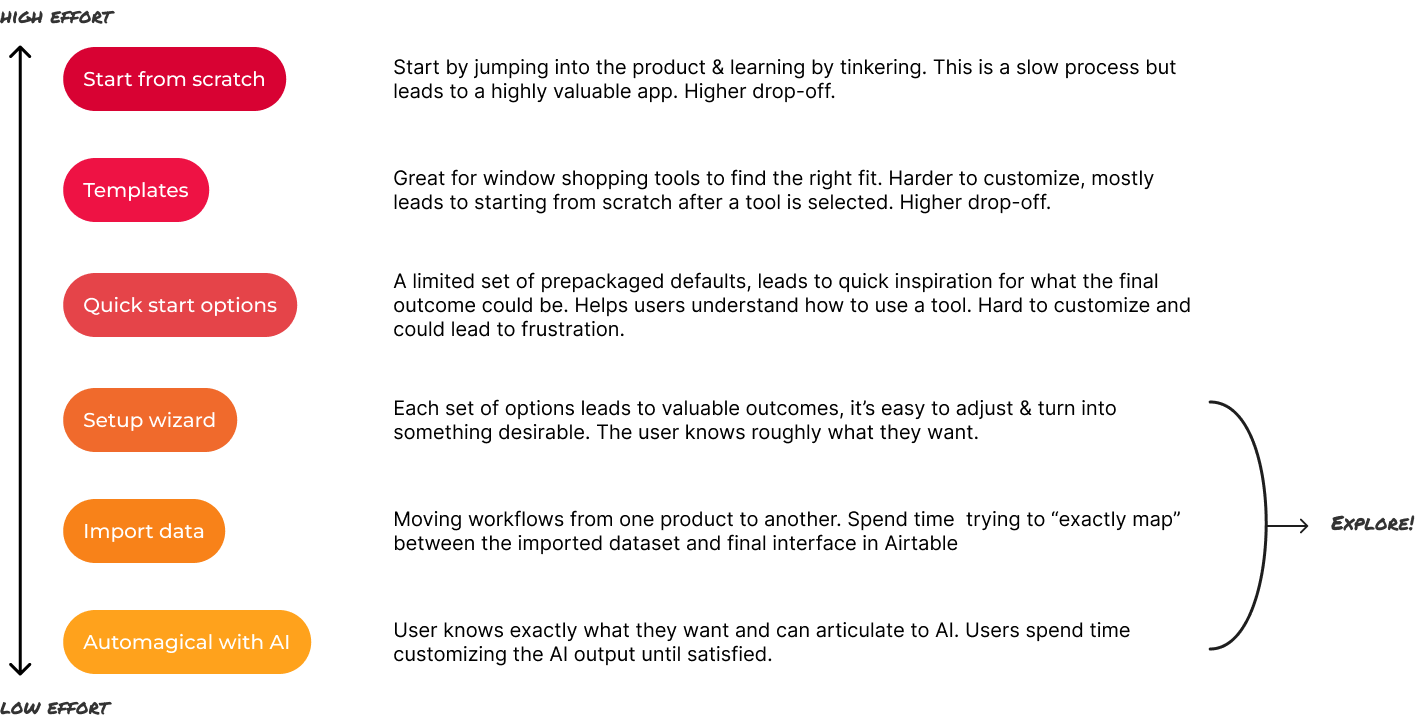
Striking the right balance
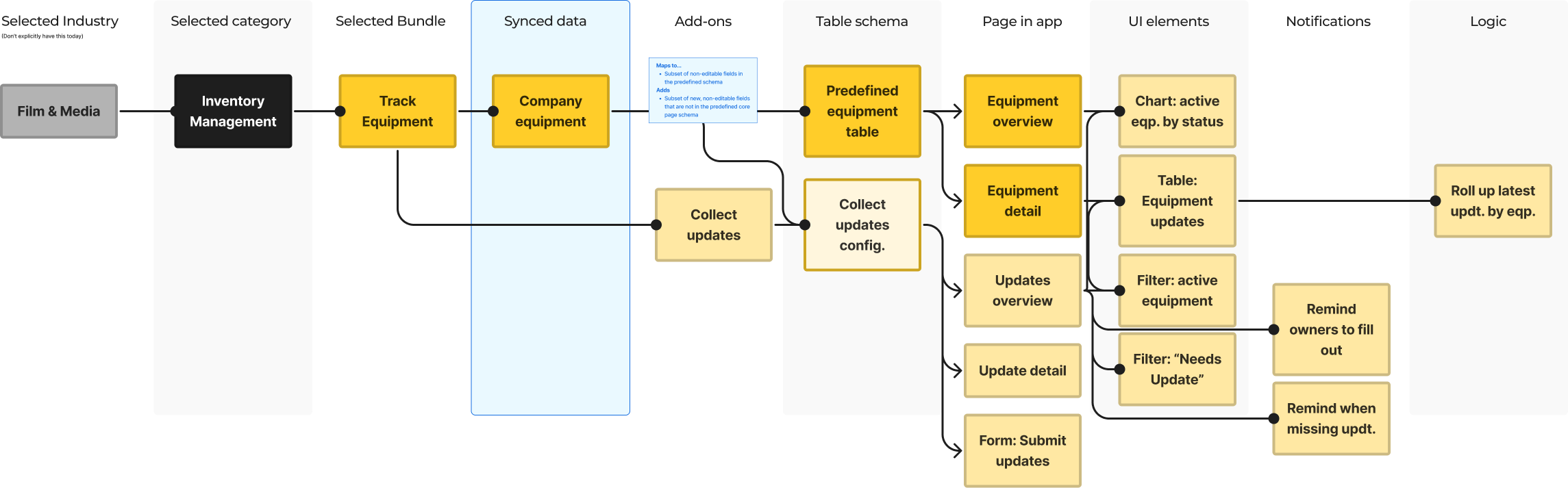
Phew, it was a struggle to find a rhythm that resonated with multiple internal stakeholders in the initial phase! It was hard to find the right balance between fast, easy app building vs. setting up core functionality (complicated and time-consuming), making it easy to understand what users get with an app without overwhelming them with Airtable jargon, and providing bundles of functionality that are contextual so that users see instant value while also keeping it generic enough to help us scale later.
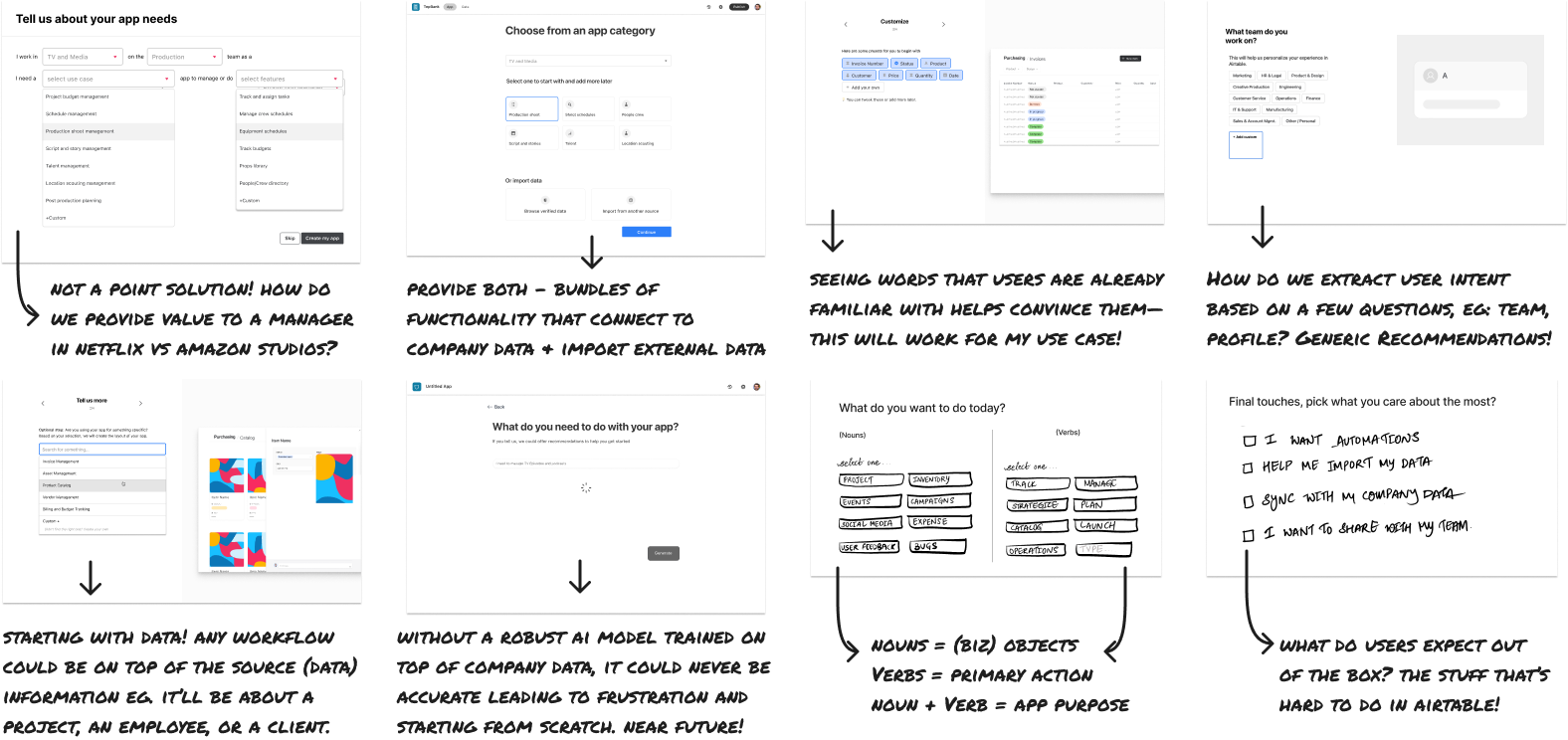
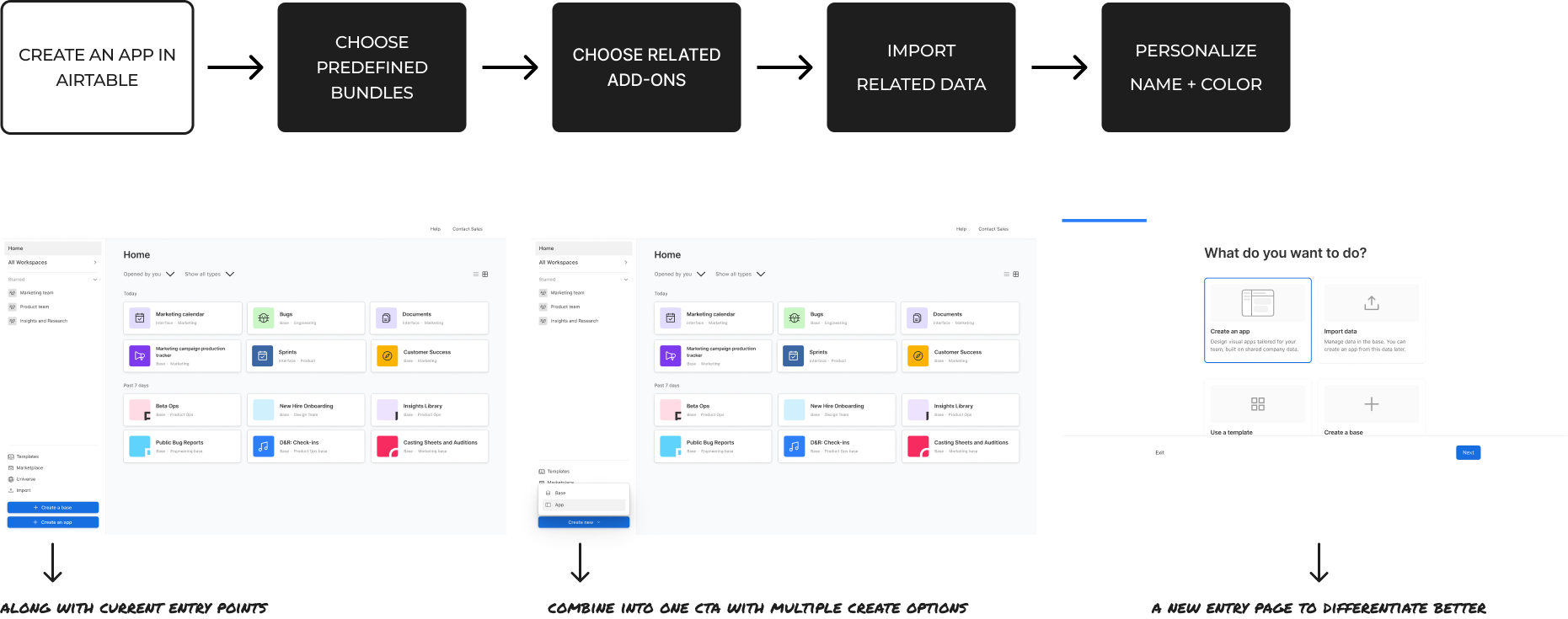
What do you want to start?
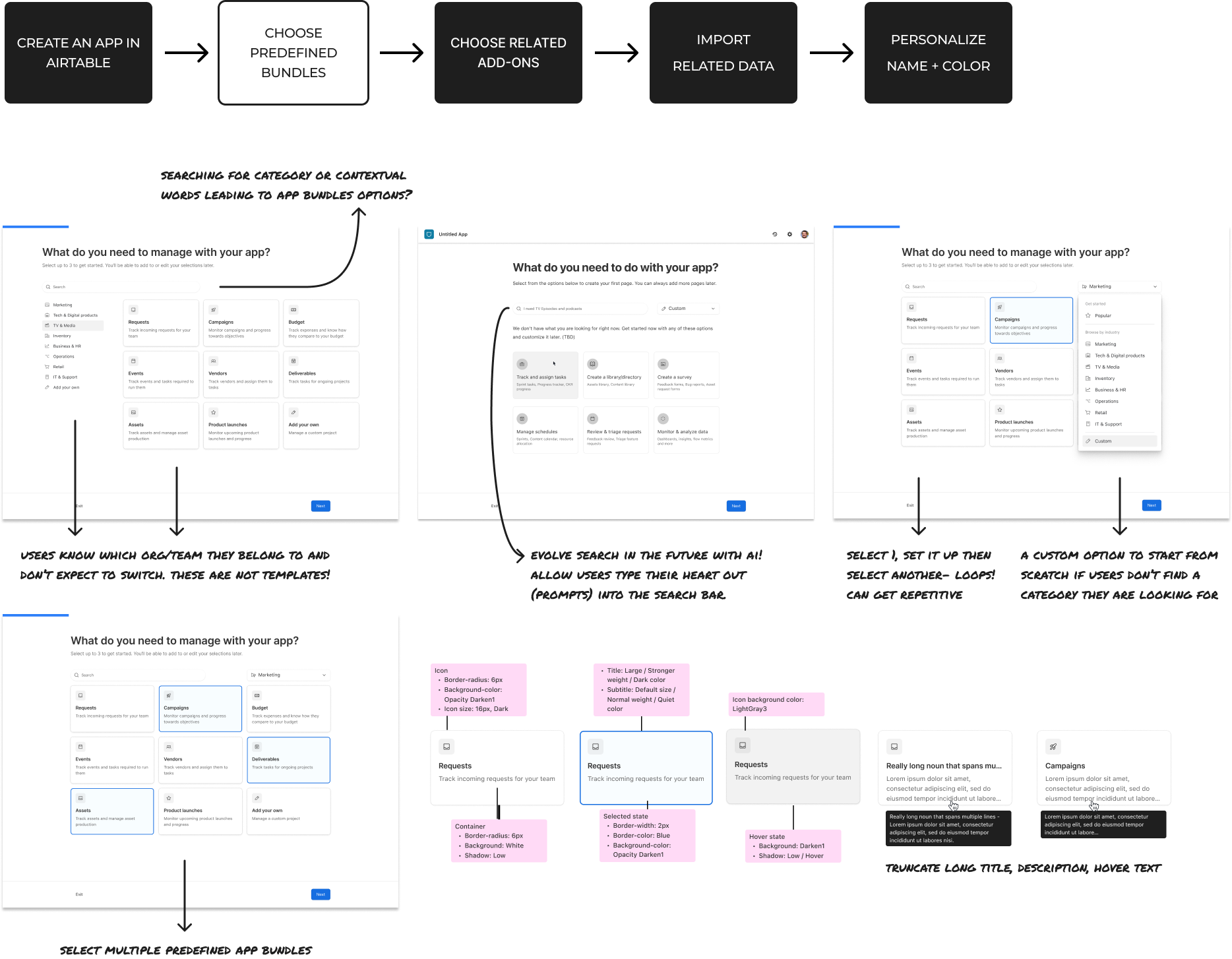
What do you want to manage with your app?
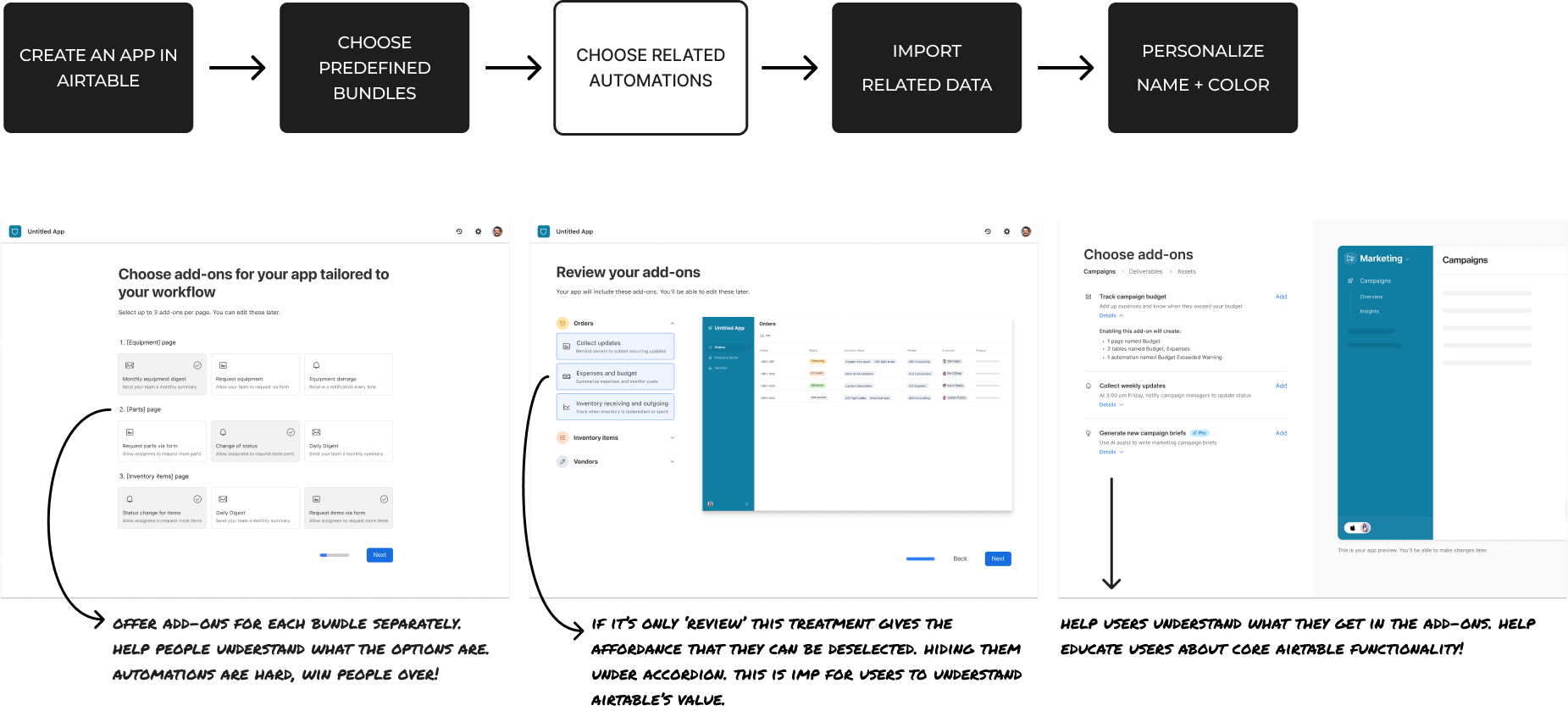
Choose add ons

Do you have existing data?

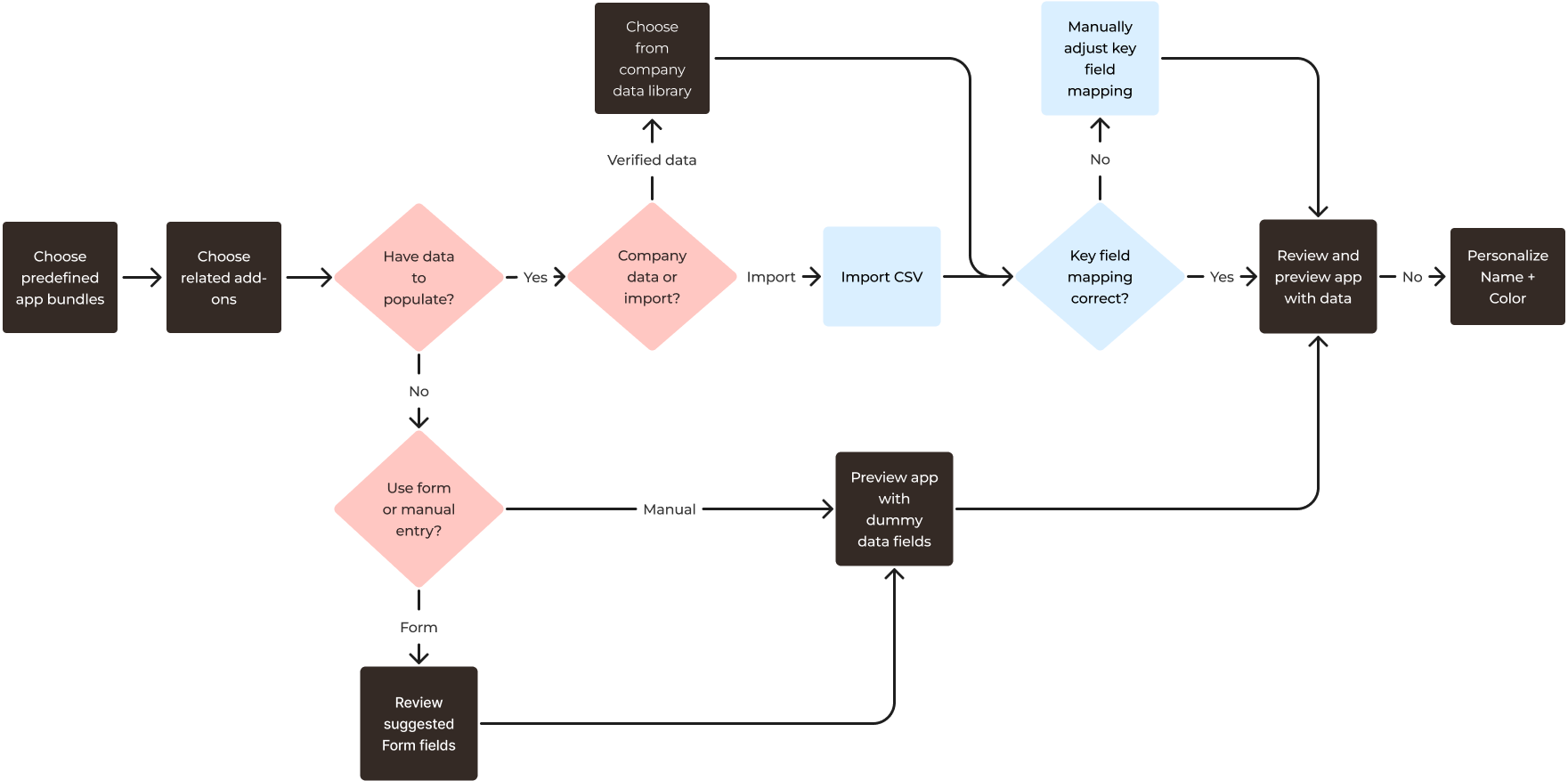

Name your app
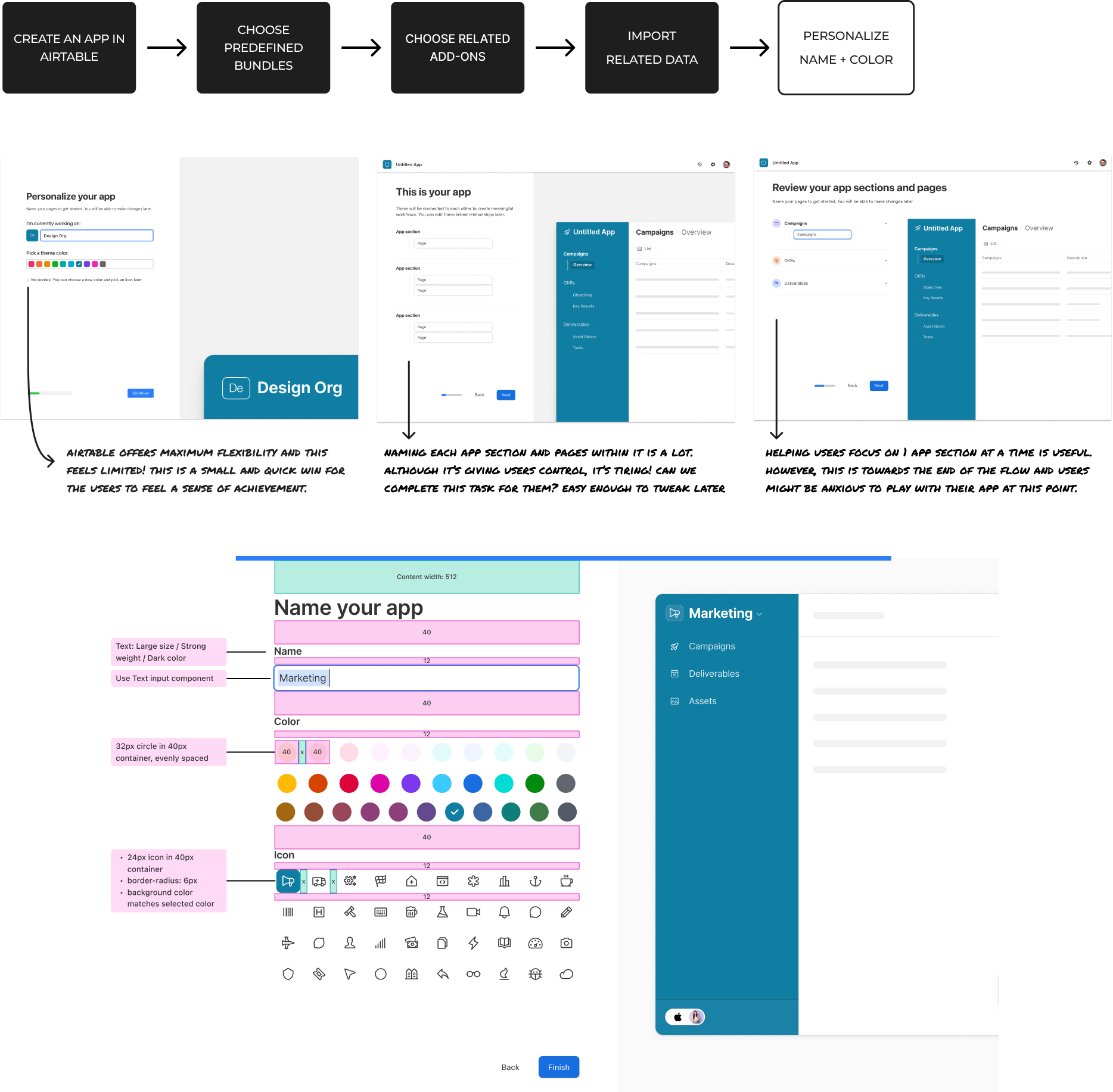
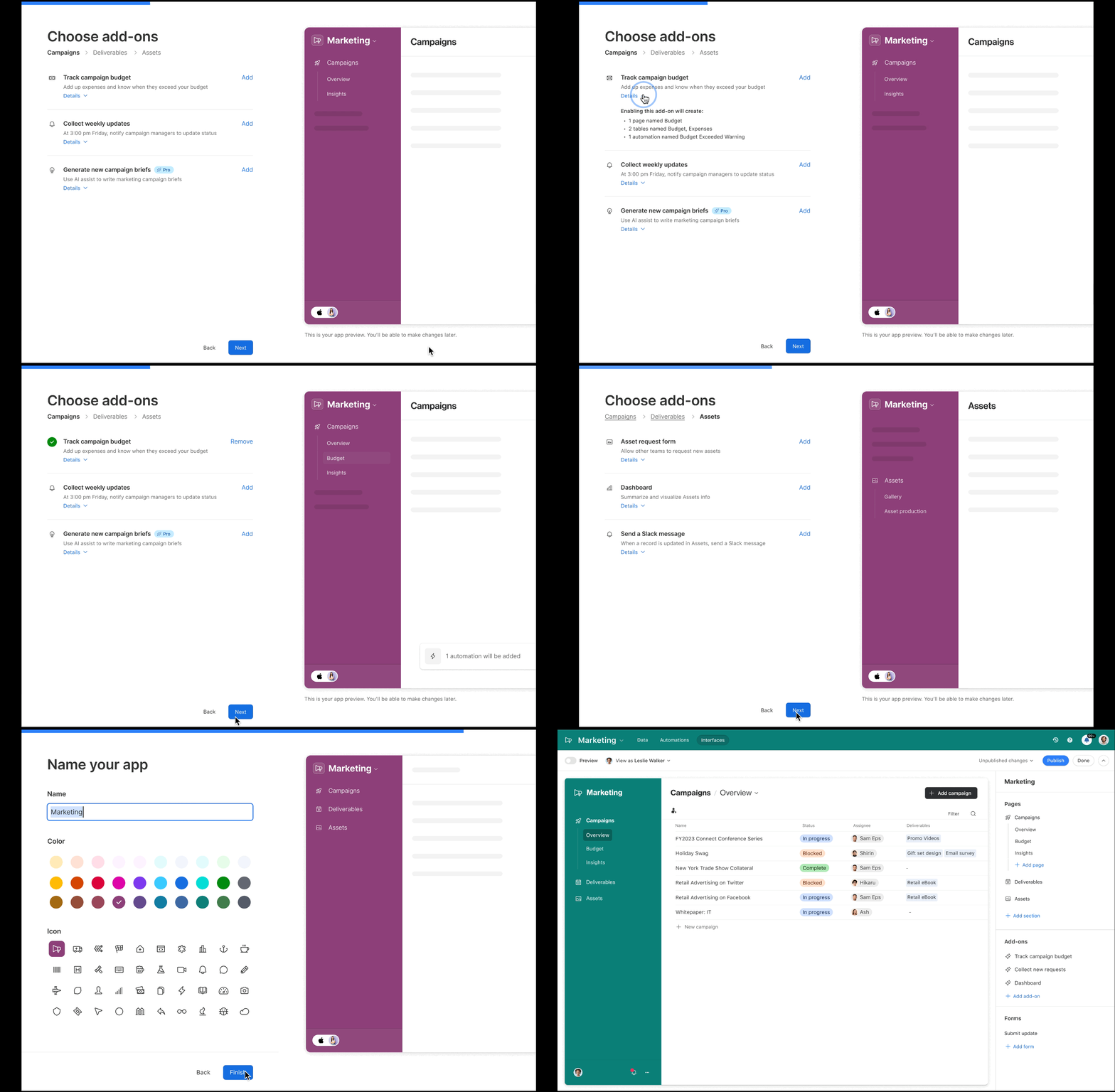
“I didn't even imagine in my greatest imaginings that this is one way this could look. And so just kind of being given this example — being like oh, you guys are thinking about what's the best way to present this information as well when you built these templates and tools — it gets you there faster, right? Because I'd probably stumble about it. I probably spend a lot of time thinking like, okay, what's the best way to show this information? What information do I want to show? What's the best way to interact with this?This [experience] got me there so quickly.“
“I think the way that this app creation experience worked, it felt very intuitive to set these things up. Like how the quarters are already set up as a linked record. I didn't even have to think about it. It saves you a couple of hours, probably, doing each of those initial steps [setup pages and linked records]”